Below is what actually separates a bargain pin from a premium one, without getting lost in jargon.
What should they check first when buying custom lapel pins Australia?
They should start with the pin type, the metal finish, and the attachment backing, because those three decide most of the look and durability. If a supplier is vague on any of these, it is a warning sign.
For custom lapel pins Australia, the fastest way to avoid disappointment is to ask for close-up photos of the exact pin style, not a generic catalogue image. To get a custom quote or explore options, click here.
Which pin style is the biggest quality divider?
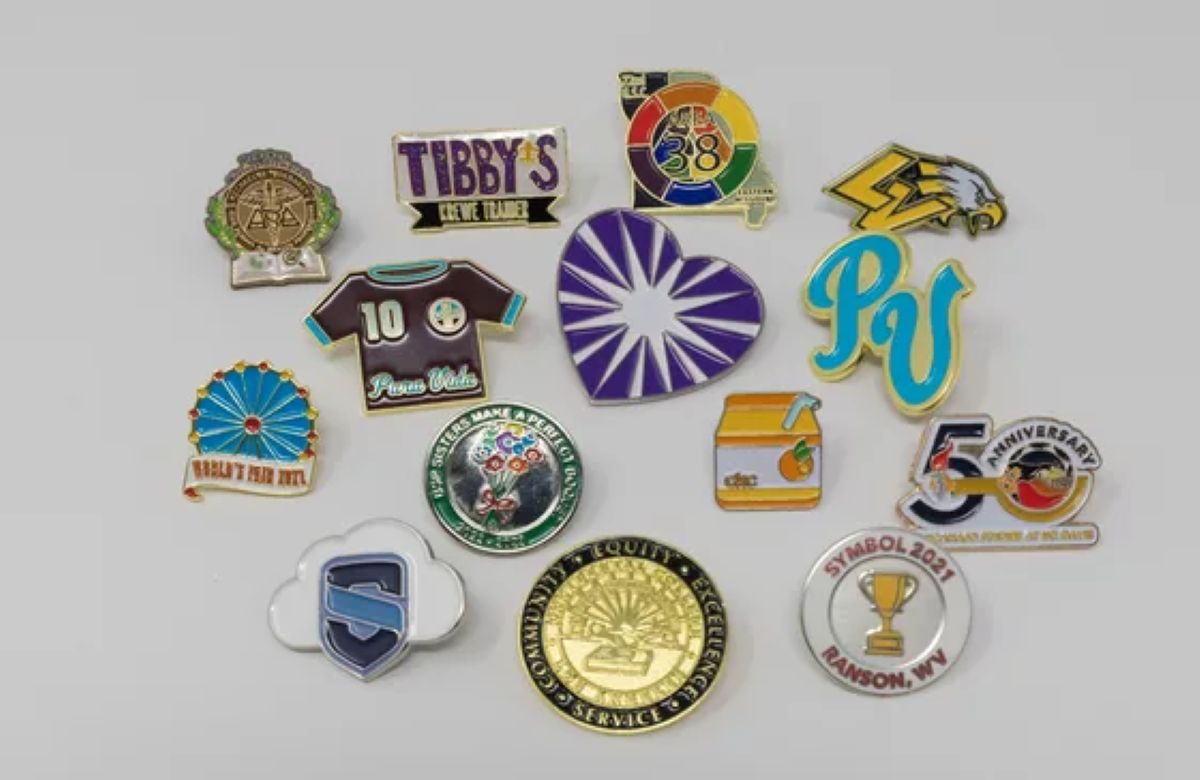
The biggest divider is whether the pin is hard enamel, soft enamel, die-struck (no colour), or printed. Each style can be “good,” but only when it matches the design and use-case.
For custom lapel pins Australia, hard enamel usually looks the most refined, soft enamel offers depth and texture, die-struck is classic and durable, and printed works best for gradients and photo-like detail.
How do hard enamel and soft enamel actually differ in real life?
Hard enamel is filled and polished flat, so the surface feels smooth and looks clean and glossy. Soft enamel sits lower than the metal lines, so it feels textured and often looks more dimensional.
When people order custom lapel pins Australia for corporate uniforms or premium gifting, hard enamel is often chosen because it reads “finished” from a distance.
When does printed artwork beat enamel?
Printed pins win when the design needs tiny text, gradients, or complex colour blends that enamel cannot reproduce cleanly. The trade-off is that printing relies on an ink layer, which can scratch if not protected.
For custom lapel pins Australia, they should ask whether the print includes an epoxy dome or protective coating if the pin will be handled frequently.
Why does metal thickness matter more than they think?
Thickness affects weight, stiffness, and perceived value. Thin pins can bend slightly, feel light, and show flaws faster, especially on larger shapes.
For custom lapel pins Australia, many quality-focused buyers prefer a thicker base because it holds its shape, sits better on fabric, and feels like a “real” piece rather than a novelty.
What should they know about plating and finishes?
Plating is the outer metal finish, such as gold, silver, nickel, black nickel, copper, or antique variations. High-quality plating looks even, consistent, and smooth, with no cloudy patches or grainy texture.
With custom lapel pins Australia, they should also confirm whether the finish is standard shiny, matte, or antique, because the same design can look completely different under indoor lighting.
Other Resources : Guide to controlling the risks associated with electroplating
Does colour matching separate good suppliers from average ones?
Yes, because colour accuracy is where many pins fail. A supplier can produce a clean pin that still looks wrong if the colours drift from the brand palette.
For custom lapel pins Australia, they should request Pantone matching for branded colours and ask whether the supplier sends a digital proof and a pre-production sample option for larger runs.
Which backing options are genuinely better?
Butterfly clutches are common and fine for light use, but they can loosen over time. Rubber clutches grip better for some wearers, while deluxe locking backs add security for uniforms, events, and high-value pins.
For custom lapel pins Australia, the “best” backing is the one that matches how often they will wear it and how painful it would be to lose it.
How can they spot weak manufacturing before ordering?
They should look for crisp edges, clean enamel fill, and consistent plating in real product photos. Weak manufacturing shows up as underfilled enamel, pitting, blurry lines, or rough edges.
When sourcing custom lapel pins Australia, they should ask for macro photos from recent orders and check whether the supplier clearly explains their production steps and QC process. Check out more about Shoulder Boards and Epaulettes: What Organisations Actually Order and Why.
What role does packaging play in perceived quality?
Packaging does not make the pin itself better, but it can make the whole product feel premium. Cards, velvet pouches, or gift boxes also protect the finish during shipping and storage.
For custom lapel pins Australia, packaging matters most when the pins are used for awards, donor gifts, staff recognition, or resale.
Are “cheap” and “low quality” always the same?
Not always, but low pricing often forces compromises in thickness, plating, colour control, or quality checks. A fair-priced supplier can still deliver strong value if they are honest about specs and limits.
With custom lapel pins Australia, they should compare quotes line-by-line: pin size, thickness, number of colours, finish type, backing, mould fees, and whether revisions or samples cost extra.
What questions should they ask before approving the final proof?
They should confirm the exact pin size, enamel type, finish, backing, and whether any tiny text will remain readable. They should also check whether lines are thick enough to cast cleanly, and whether cut-outs or complex edges add risk.
For custom lapel pins Australia, the smartest step is to treat the proof like a contract: if it is not written and approved, it is not guaranteed.
What quality differences matter most for custom lapel pins Australia?
The differences that matter most are enamel type, metal thickness, plating quality, colour matching, and a secure backing. Those five factors decide whether a pin looks premium, wears well, and lasts.
When they order custom lapel pins Australia, choosing the right build for the design usually beats chasing the lowest quote, because the best pins are the ones they are proud to hand out and wear repeatedly.